
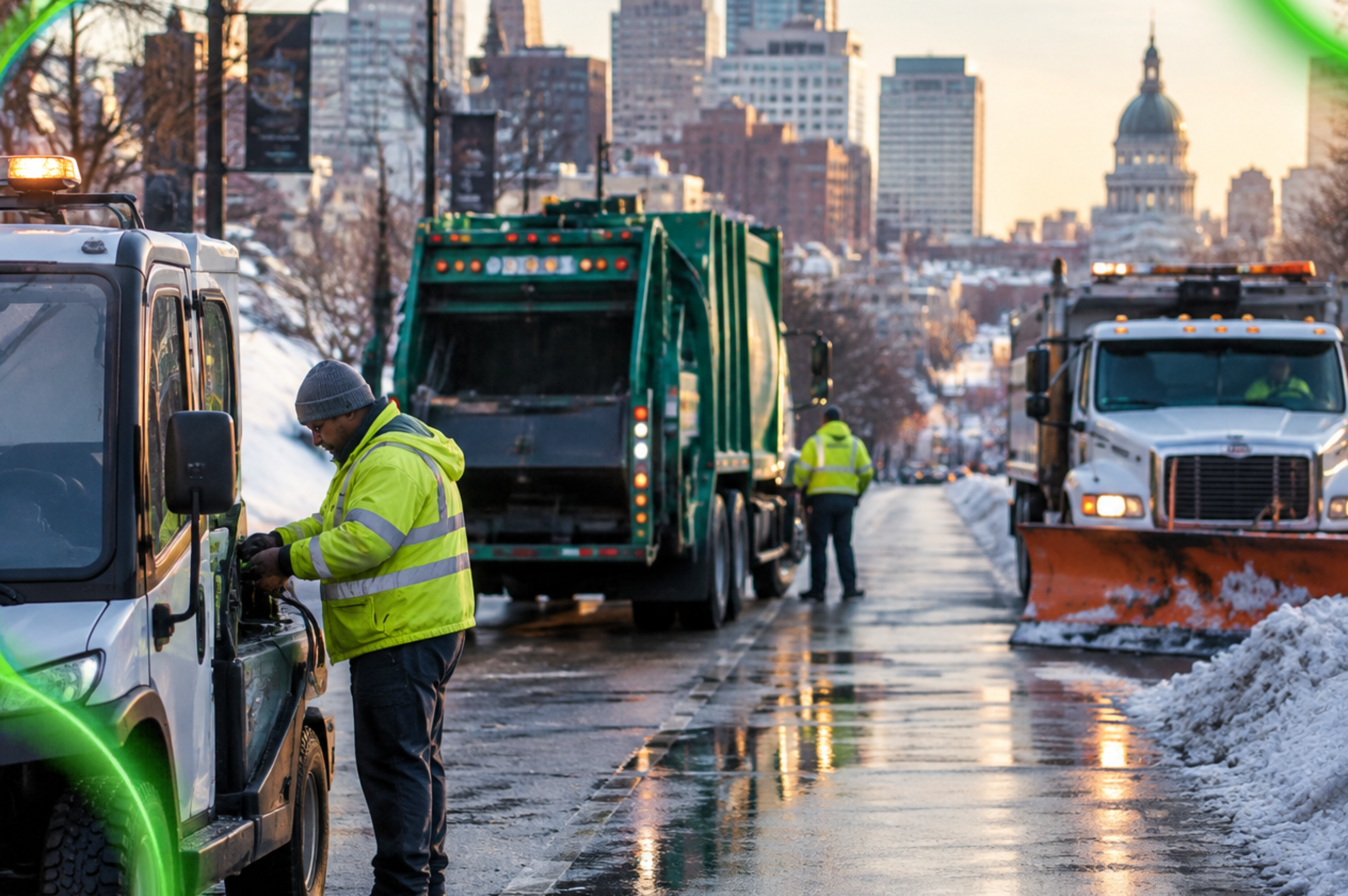
Public works departments face an increasingly demanding operational landscape.
Between maintaining critical local infrastructure and meeting aggressive clean-energy targets, municipal leaders must ensure community services remain dependable while keeping every public dollar defensible and accountable.
Managing municipal assets across streets, waste collection, utilities, and emergency response requires modern operational frameworks. Disconnected departmental software, paper logs, and basic consumer GPS devices leave agencies vulnerable to unresolved resident complaints, unverified contractor hours, and regulatory blind spots.
Adopting integrated fleet intelligence allows local governments to modernize daily operations, improve crew safety, and navigate clean-energy transitions with confidence.
1. Verifying Service Delivery and Resolving 311 Citizen Inquiries
Municipal transparency directly impacts community trust. Agency directors frequently handle citizen inquiries regarding missed service calls, unplowed streets during storms, or property damage allegedly caused by municipal vehicles.
Without objective, timestamped records, resolving 311 disputes often turns into an unresolved disagreement between field operators and residents. Modern connected telematics addresses this by providing definitive operational proof:
- Geofenced Breadcrumbs: Time-series GPS records verify the exact moment a service vehicle crossed a street segment or visited an address.
- Integrated In-Cab Video Evidence: High-definition dash cameras capture context during alleged damage incidents, protecting city drivers from unwarranted liability claims.
- Streamlined Claims Investigations: Dispatchers can reference historical location records to confirm or dismiss claims in minutes rather than conducting multi-week manual reviews.
2. Overcoming EV Range Anxiety in Municipal Operations
As local governments establish clean-fleet targets, transitioning heavy-duty and utility vehicles to electric power introduces unique operational considerations. Fleet managers must meet sustainability targets without risking service interruptions or mid-route battery depletion.
Direct CAN-bus integration and real-time battery State of Charge (SoC) telemetry allow dispatch teams to manage electric vehicles effectively:
- Live Range Monitoring: Dispatchers track battery health, consumption rates, and remaining range under actual working conditions—such as operating heavy auxiliary equipment or driving in sub-zero temperatures.
- Optimized Route Allocation: Telematics data helps departments assign routes based on current battery status, ensuring EV mileage is maximized where it delivers the highest return.
- Quantifiable Impact: Continuous tracking measures fuel reductions and carbon offsets, providing verifiable metrics for municipal climate goals and federal grant compliance.
3. Coordinating Seasonal Contractors and Severe Weather Readiness
Winter storms and emergencies require public works departments to scale up operations immediately. In many cities, this means onboarding hundreds of private contractor vehicles to assist with snow clearing and road maintenance.
Relying on mobile phone check-ins or manual logs often leads to patchy visibility, overlapping coverage, and disputed contractor invoices.
- Rapid Gateway Provisioning: Equipping contractor vehicles with plug-and-play telematics gateways that install in under two minutes gives agencies instant visibility across temporary fleets.
- Audit-Ready FEMA Records: Live tracking of plow coverage creates automated, audit-ready operational records required for federal disaster reimbursements.
4. Protecting Field Crews with AI-Driven Safety Technology
Operating utility trucks, heavy sweepers, and snowplows in dense urban environments requires active situational awareness. Traditional safety programs that depend entirely on post-incident reviews miss the chance to prevent collisions proactively.
Connected in-cab technology actively supports field operators:
- Proactive In-Cab Alerts: Real-time AI detection alerts drivers to mobile phone distraction or unsafe following distances, enabling them to self-correct on the road.
- Blind-Spot Monitoring: Sensor coverage around large machinery helps drivers safely navigate crowded streets, tight alleys, and pedestrian zones.
- Emergency Assistance: In-cab panic buttons provide operators with an immediate line to dispatch during roadside hazards or medical emergencies.
The Takeaway: How QnA Tech Helps Public Works Modernize
Transitioning to a modern, data-driven public works department does not require overhauling your entire IT infrastructure all at once.
As an implementation partner, QnA Tech collaborates with municipal agencies to deploy Samsara’s unified operations platform, helping local governments solve everyday operational friction:
- Municipal Systems Integration: QnA Tech engineers fast REST API connections that feed telematics data directly into your existing GIS and work order systems, including ArcGIS and Cityworks.
- Electrification Readiness: We help analyze current municipal routes, identify optimal vehicles for EV transition, and deploy State of Charge (SoC) tracking to maximize clean-fleet investments.
- Turnkey Seasonal Deployment: We assist departments with plug-and-play gateway provisioning, ensuring contractor snowplows and storm fleets are tracked and audit-ready before severe weather hits.
- Defensible Accountability: By pairing high-precision GPS with video intelligence, we help public works teams safeguard drivers, eliminate false citizen claims, and protect taxpayer funds.
Modernize Your Fleet Operations
Interested in assessing your agency’s fleet readiness?
Ready to Strengthen Your IT Environment?
Schedule a free 15-minute consultation with the QnA Tech team.
No obligation—just a focused conversation about your current IT environment, business objectives, and opportunities to improve security, performance, and resilience.
We’ll discuss:
- Your organization’s current IT challenges and priorities
- Cybersecurity risks and strategies to strengthen your security posture
- Infrastructure modernization, cloud, and AI initiatives
- Data protection, backup, and cyber recovery best practices
- Practical recommendations tailored to your organization’s goals
Whether you’re planning your next technology refresh, evaluating new solutions, or looking to improve operational efficiency, QnA Tech is here to help you make informed decisions with confidence.
 Let’s connect: 📧 salesinfo@qnatech.com
📞 (646) 453-7119 * 🌐 www.qnatech.com
At QnA Tech, we help organizations evaluate emerging technologies such as artificial intelligence within the larger context of their IT infrastructure, cloud environments, cybersecurity, data, and business objectives.
The goal isn’t to implement AI simply because it’s new.
It’s to identify where AI can improve productivity, research, collaboration, and decision-making—and ensure the underlying technology foundation is secure, scalable, and aligned with the organization’s long-term strategy.
AI becomes valuable when technology, information, security, and business strategy work together.
How is your organization exploring AI-powered research and knowledge tools?
Technology should bring people together—not create barriers.