
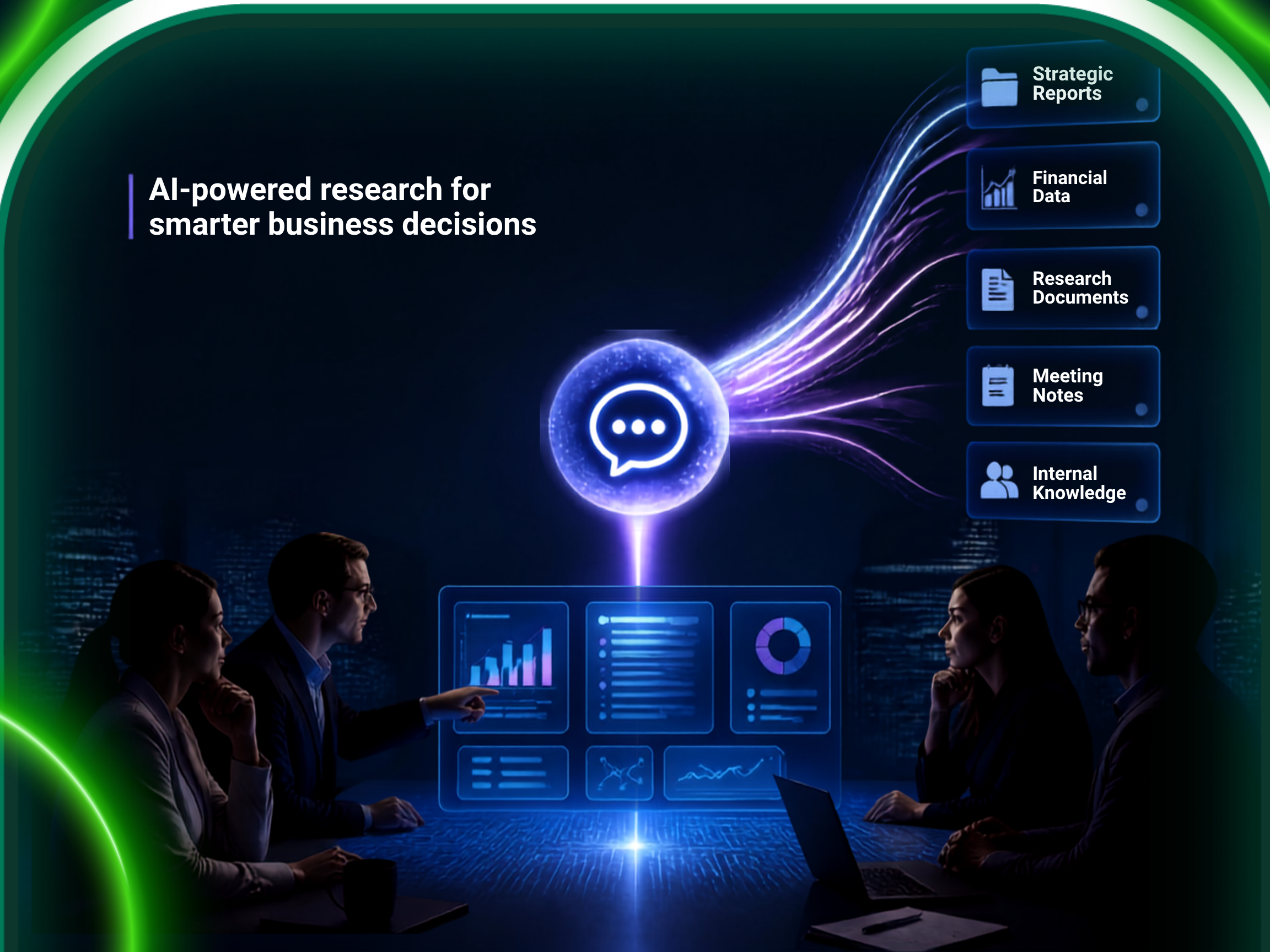
Most organizations don’t have an information problem. They have an information overload problem.
Reports. PDFs. Presentations. Research. Meeting notes. Spreadsheets. Websites. Training materials. Technical documentation.
Organizations are surrounded by information—but employees can still spend significant time searching for what they need, reading through documents, comparing sources, and trying to turn it all into something useful.
Artificial intelligence is beginning to change that.
One interesting example is Google’s Gemini Notebook, formerly known as NotebookLM.
But the real story isn’t the name change.
It’s the bigger question the technology raises:
What if employees could stop searching through information and start having conversations with it?
What Is Gemini Notebook?
Gemini Notebook is Google’s AI-powered research and thinking environment.
Instead of simply asking an AI system a general question, users can create notebooks around selected sources and use AI to explore and understand that information.
Imagine bringing together reports, research, presentations, PDFs, websites, and other relevant materials and then asking:
“What are the five most important themes across these sources?”
“Where do these reports disagree?”
“What risks appear repeatedly?”
“Summarize this information for an executive audience.”
“Which source supports this conclusion?”
Instead of manually navigating every piece of information, employees can begin interacting with their research conversationally.
That represents a significant shift in how knowledge work can happen.
From Searching for Information to Understanding It
Think about a typical research project.
Someone searches the web.
Opens multiple websites.
Downloads reports.
Reads PDFs.
Reviews presentations.
Takes notes.
Compares information.
Creates a summary.
Then prepares something explaining what they discovered.
Each task makes sense.
Together, however, they can consume hours.
AI-powered research environments can compress parts of that process.
Employees still need to evaluate the information, apply judgment, verify important findings, and make decisions.
But AI can help with some of the heavy lifting involved in organizing, comparing, summarizing, and connecting information.
That changes the role of AI.
Instead of simply creating content, AI becomes a tool that helps people understand information.
Why Source-Grounded AI Matters
One of the biggest concerns surrounding generative AI is trust.
Where did the answer come from?
Can it be verified?
Is the AI relying on the information employees actually want it to use?
Tools such as Gemini Notebook are particularly interesting because the experience can be built around sources the user selects.
For businesses, that concept has enormous potential.
Organizations already possess valuable knowledge.
The challenge is often making that knowledge accessible.
Policies may live in one location.
Product documentation somewhere else.
Research reports in another system.
Presentations on a shared drive.
Training materials on another platform.
Imagine being able to bring relevant materials together and ask:
“What does our information tell us about this issue?”
That’s a very different experience from manually searching through folders and opening files one at a time.
AI Is Moving Beyond Simple Summaries
The first generation of generative AI made document summarization impressive.
Upload something.
Receive a summary.
But AI research tools are moving beyond that.
Information can increasingly be transformed into different formats depending on how people need to consume it.
A long report might become an executive briefing.
Technical documentation could become a study guide.
Research could become a presentation.
Training materials could become quizzes.
Complex information could become an infographic or an audio overview.
That matters because people don’t all process information the same way.
The future of workplace knowledge may not simply be about where information is stored.
It may increasingly be about how quickly that information can be transformed into something useful.
What Could This Mean for Organizations?
The potential applications extend across departments.
IT and Technology Teams
IT professionals constantly review vendor documentation, technical specifications, security reports, implementation guides, product information, and infrastructure requirements.
AI-assisted research could help teams organize these materials, identify common themes, compare information, and surface questions that require deeper investigation.
Executive Leadership
Executives frequently need to understand large amounts of information without reviewing every underlying document.
AI could help transform research, reports, market information, and internal materials into more focused briefings—while still allowing leaders to investigate the underlying sources.
Sales Teams
Sales professionals rely on product information, case studies, presentations, competitive intelligence, customer research, and technical documentation.
AI-powered knowledge environments could make that information easier to explore before customer conversations.
Employee Training
Organizations already possess enormous amounts of institutional knowledge inside policies, presentations, procedures, technical documentation, and training materials.
AI could help transform those resources into summaries, study materials, quizzes, and other interactive learning experiences.
Research and Analysis
Perhaps the most obvious opportunity is research itself.
Instead of simply collecting information, employees can begin interrogating it.
What themes appear repeatedly?
Where do our sources disagree?
What information is missing?
Which assumptions should we question?
What deserves further investigation?
Those are much more valuable questions than simply asking AI to write something.
Don’t Start With AI. Start With the Business Problem.
Organizations shouldn’t implement AI simply because everyone is talking about it.
A better starting point is:
What problem are we trying to solve?
Are employees spending too much time searching for information?
Is institutional knowledge difficult to access?
Are teams duplicating research?
Does technical documentation take too long to analyze?
Could employee training become more effective?
Could executives receive relevant information faster?
Once the business problem is clear, organizations can determine whether AI is the appropriate solution.
That’s how AI moves from experimentation toward measurable business value.
The Future of Work May Be Less About Searching
We’re beginning to move from:
Search → Read → Interpret → Create
toward:
Ask → Understand → Verify → Act
That may sound like a subtle difference.
It isn’t.
It represents a fundamental change in how employees could interact with organizational knowledge.
Tools such as Gemini Notebook provide an early glimpse of what that future could look like.
Takeaway
The most interesting thing about Gemini Notebook isn’t simply that AI can summarize a document.
It’s that AI is beginning to change the relationship between people and information.
For organizations, the opportunity isn’t simply generating more content. It’s making existing knowledge easier to find, understand, connect, and use.
But successful adoption requires more than selecting an AI tool.
Organizations need the right combination of technology, trusted information, cybersecurity, governance, and clear business objectives.
The question for IT leaders is quickly changing from:
“Should we use AI?”
to:
“Where can AI create meaningful value—and how do we implement it responsibly?”
Ready to Strengthen Your IT Environment?
Schedule a free 15-minute consultation with the QnA Tech team.
No obligation—just a focused conversation about your current IT environment, business objectives, and opportunities to improve security, performance, and resilience.
We’ll discuss:
- Your organization’s current IT challenges and priorities
- Cybersecurity risks and strategies to strengthen your security posture
- Infrastructure modernization, cloud, and AI initiatives
- Data protection, backup, and cyber recovery best practices
- Practical recommendations tailored to your organization’s goals
Whether you’re planning your next technology refresh, evaluating new solutions, or looking to improve operational efficiency, QnA Tech is here to help you make informed decisions with confidence.
 Let’s connect: 📧 salesinfo@qnatech.com
📞 (646) 453-7119 * 🌐 www.qnatech.com
At QnA Tech, we help organizations evaluate emerging technologies such as artificial intelligence within the larger context of their IT infrastructure, cloud environments, cybersecurity, data, and business objectives.
The goal isn’t to implement AI simply because it’s new.
It’s to identify where AI can improve productivity, research, collaboration, and decision-making—and ensure the underlying technology foundation is secure, scalable, and aligned with the organization’s long-term strategy.
AI becomes valuable when technology, information, security, and business strategy work together.
How is your organization exploring AI-powered research and knowledge tools?
Technology should bring people together—not create barriers.