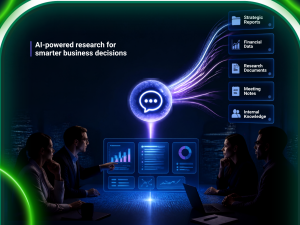

Communication has never been more important—or more complicated.
Most organizations have invested in digital tools to help employees stay connected. Email, instant messaging, video conferencing, phone systems, project management platforms, and collaboration software have become essential parts of the modern workplace.
Ironically, the very tools designed to improve communication are often creating the opposite effect.
Instead of simplifying collaboration, organizations are finding themselves overwhelmed by disconnected platforms, duplicate conversations, and information scattered across multiple applications.
If this sounds familiar, you’re not alone.
One of the most common concerns IT leaders share today is simple:
“We have too many communication tools.”
The Collaboration Challenge
Over the last several years, businesses rapidly adopted new communication technologies to support remote work, hybrid teams, and digital transformation.
The result?
Many organizations now rely on multiple communication platforms simultaneously.
Employees may use:
- Email for formal communication
- Microsoft Teams or Slack for messaging
- Zoom or Webex for meetings
- Mobile phones for urgent conversations
- Project management software for updates
- Shared drives for collaboration
While each platform serves a purpose, using too many disconnected solutions often creates confusion rather than efficiency.
Conversations become fragmented
A project may begin via email, continue in a messaging app, move to a video meeting, and end with a document stored elsewhere.
Without a centralized communication strategy, teams struggle to stay aligned.
Productivity decreases
Switching between multiple applications throughout the day interrupts focus and reduces efficiency.
Research consistently shows that frequent context switching costs employees valuable time and increases workplace fatigue.
Communication Should Be Invisible
The best communication technology is the technology your employees barely notice.
Instead of forcing users to choose which application to use, modern organizations are focusing on creating experiences in which communication flows naturally.
That means:
- One integrated communication environment
- Consistent user experiences
- Secure collaboration
- Easy access from anywhere
- Seamless transitions between messaging, calling, and meetings
When technology becomes simpler, people collaborate better.
Why Unified Communications Matter
Unified Communications isn’t simply about combining software.
It’s about creating a connected digital workplace where communication becomes effortless.
A modern unified communications strategy helps organizations:
✔ Improve employee productivity
✔ Reduce communication silos
✔ Support hybrid and remote work
✔ Strengthen collaboration across departments
✔ Improve customer responsiveness
✔ Simplify IT management
Instead of managing multiple disconnected tools, IT teams can support a centralized environment that’s easier to secure, maintain, and scale.
The Future of Workplace Communication
As organizations continue investing in digital transformation, communication will remain at the center of every business initiative.
Artificial intelligence, workflow automation, and cloud collaboration are changing how employees work—but those innovations only deliver value when communication is connected.
The organizations that succeed won’t necessarily have the most technology.
They’ll have technology that works together.
Because collaboration shouldn’t feel complicated.
It should simply work.
Takeaway
Technology should remove barriers—not create them.
If your employees spend more time navigating communication tools than collaborating, it may be time to rethink your communication strategy.
The goal isn’t adding another platform.
The goal is creating an environment where people, information, and conversations come together seamlessly.
When communication becomes simpler, productivity, collaboration, and innovation naturally follow.
Let’s connect: salesinfo@qnatech.com | (646) 453-7119
At QnA Tech, we deliver innovative IT solutions tailored to our clients’ needs, prioritizing customer satisfaction, security, and success. Guided by integrity, excellence, innovation, security, and collaboration, we build trust and empower organizations through future-ready technology, meaningful partnerships, and a commitment to improving lives.